Cut back to sound edges
The failure is always bigger than the hole. Squaring the area back to material that is genuinely solid gives the patch clean vertical faces to bond to, instead of a feathered edge that ravels away from the middle out.
 Seal Pro MastersSealcoating & Asphalt Maintenance
A pothole is a symptom. Something underneath got wet and gave way, and the hole is where the surface finally collapsed into it. Shovelling material into that hole and rolling it flat looks like a repair for about a season. A patch that lasts means squaring the failure back to solid edges and rebuilding from the bottom.
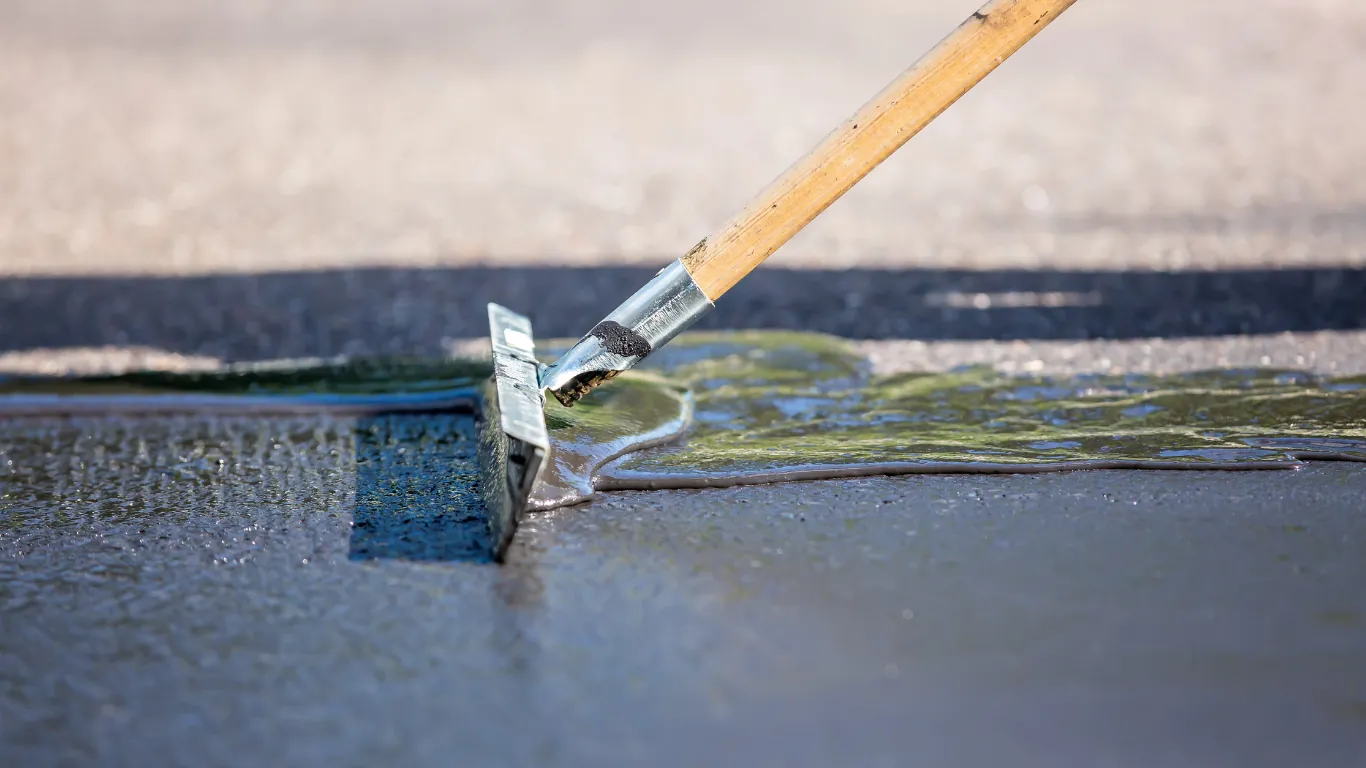
The failure is always bigger than the hole. Squaring the area back to material that is genuinely solid gives the patch clean vertical faces to bond to, instead of a feathered edge that ravels away from the middle out.
If the base under the hole is saturated or soft, patching over it buys you months. Where that is what we find, we will tell you what the surface actually needs rather than hiding it under fresh material.
Hot mix where the season and the size of the repair allow it, cold patch where a surface needs to be safe and usable today. Both have a place, and the choice is about your situation rather than about what is on the truck.
Material placed in lifts and compacted properly, then finished flush with the surrounding surface so it does not become a lip that traps water or catches a plough.
These are almost always booked together, and they have to happen in the right order — fill, patch, seal, then stripe.
Booked most often in these communities — and available in all 39 we cover.
Hot mix is laid warm and compacts into a dense, long-lasting repair, but it needs suitable weather and a supply. Cold patch can go down in almost any conditions and takes traffic immediately, which makes it the right answer for a hazard that has to be safe today. We use both and will tell you which one your job is getting and why.
Both. Beyond single holes we handle sunken areas and worn-out sections of driveway and lot. Once a surface has failed across most of its area, the honest recommendation is often removal and replacement rather than patching, and we will say so.
Always, and in that order. Repairs go in first, then the sealer over the top. Fresh patch material may also need to cure before it takes sealer, which can mean two visits — we will tell you up front if that is your situation rather than rushing it.
A freshly sealcoated surface makes all the difference to how a property looks and how long it lasts, so every coat goes on with precision and care. Your satisfaction is the priority — and if you are not completely thrilled with the result, we will go the extra mile to make it right.
Free estimate, no obligation. Call (434) 204-4282 or send the form and we will come and look at the surface.