ServicesAreasGuidesReviewsAboutContactCall (434) 204-4282Text us
The core service

Sealcoating that buys you years, not looks.

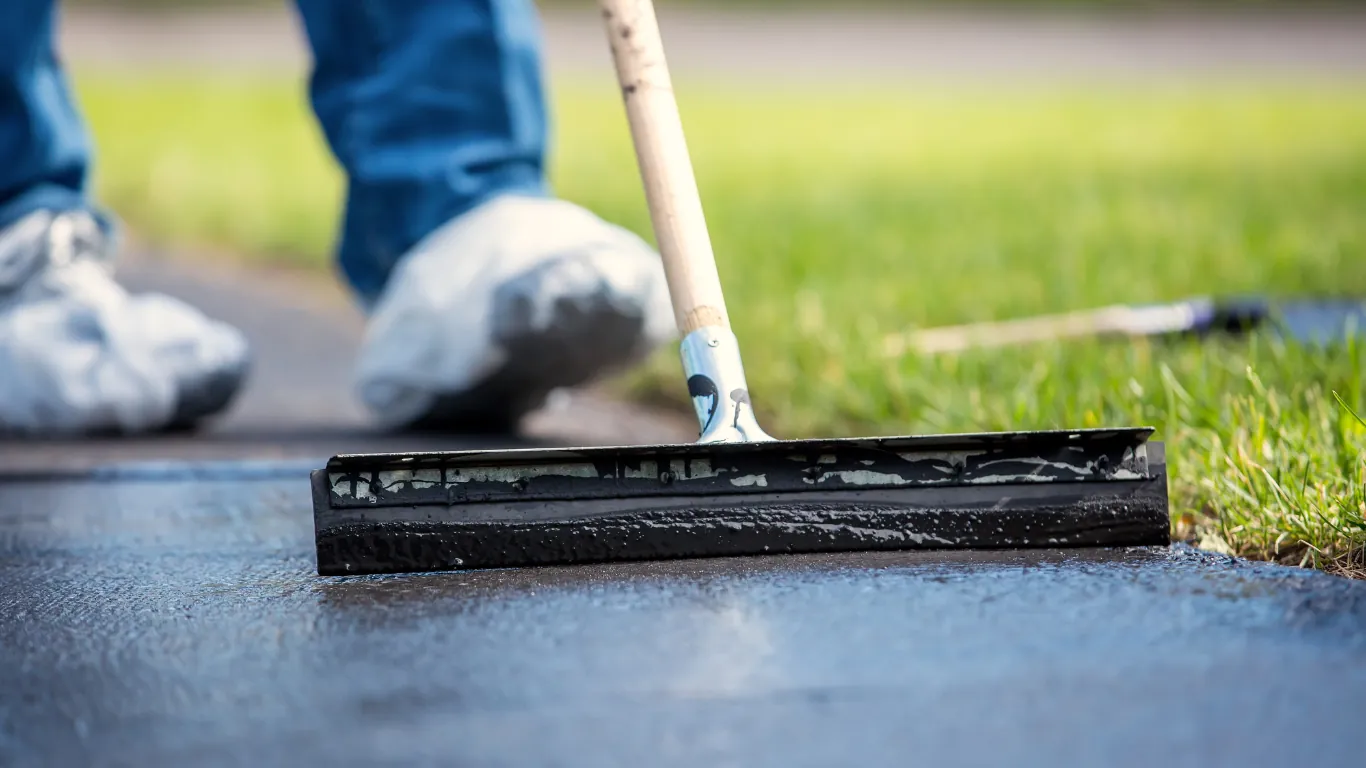
Asphalt does not fail all at once. It goes grey, then porous, then it lets water into the base, and then it is a repair job instead of a maintenance job. Sealcoating is the step that interrupts that sequence: a coat over the surface that blocks the UV and the water doing the damage, and takes the abuse instead of the pavement.

Sealcoating by Seal Pro Masters in Charlottesville and Central Virginia
Sealcoating

What you are actually paying for.

01

Cleaned before anything is applied

Sealer bonds to asphalt, not to dirt. Surfaces get swept and blown out, and oil-stained areas get treated with a spot primer first — sealer will not stick to a grease patch, and skipping that step is why you sometimes see a fresh seal peeling in exactly the spot the car parks.

02

Cracks handled before the coat, not with it

Sealcoat is a coating, not a filler. Anything wide enough to matter gets crack-filled first, so the sealer goes over a closed surface instead of bridging a gap that reopens in a month.

03

Edges and detail cut by hand

Along the garage apron, the walk, the curb line and around every drain and post — the perimeter is where a sloppy job announces itself, and it is entirely a matter of whether someone was willing to do it by hand.

04

Enough coats, and time to cure

Applied at the rate the surface actually needs rather than stretched thin to make the material go further. Then it needs to be left alone: dry to the touch in roughly 4 to 8 hours, and off it with vehicles for 24 to 48.

Also on the truck

One crew, the whole surface.

These are almost always booked together, and they have to happen in the right order — fill, patch, seal, then stripe.

Where we do this

Sealcoating across Central Virginia.

Booked most often in these communities — and available in all 39 we cover.

Good to know

Sealcoating — your questions.

How often should asphalt be sealcoated?

Every two to three years for most driveways and lots. High-traffic areas and surfaces that take a lot of weather may want it more often. Sealing on a schedule is much cheaper than sealing when it finally looks bad, because by then some of the damage is structural.

How long before I can drive on it?

Dry to the touch in about 4 to 8 hours depending on temperature and humidity. Keep vehicles off for 24 to 48 hours so it cures all the way through — driving on a coat that is only surface-dry is the fastest way to leave tyre marks in it.

Will sealcoating fix my cracks and potholes?

No, and anyone who tells you otherwise is selling you a coat of paint over a problem. Sealcoating protects and extends the life of sound asphalt. Cracks want crack filling and broken areas want patching, both of which we do — and both of which happen before the seal goes on.

What is the best time of year for it?

Spring through early fall, when temperatures stay above about 50°F and you can count on a dry stretch for curing. Sealer applied into cold or wet weather does not cure properly, and a coat that did not cure is a coat you paid for twice.

Try it risk free

100% satisfaction guaranteed.

A freshly sealcoated surface makes all the difference to how a property looks and how long it lasts, so every coat goes on with precision and care. Your satisfaction is the priority — and if you are not completely thrilled with the result, we will go the extra mile to make it right.

Free estimate

Want a price on sealcoating?

Free estimate, no obligation. Call (434) 204-4282 or send the form and we will come and look at the surface.

Call nowTextFree quote