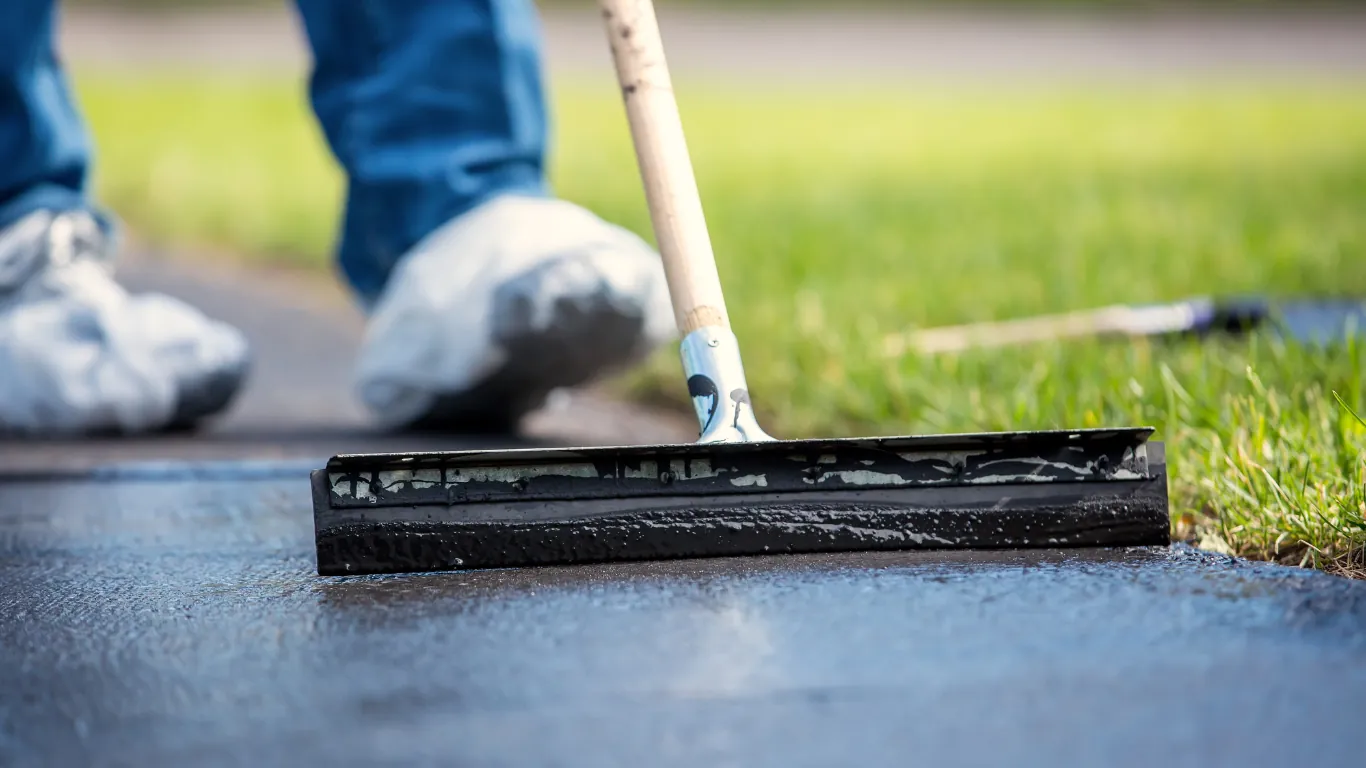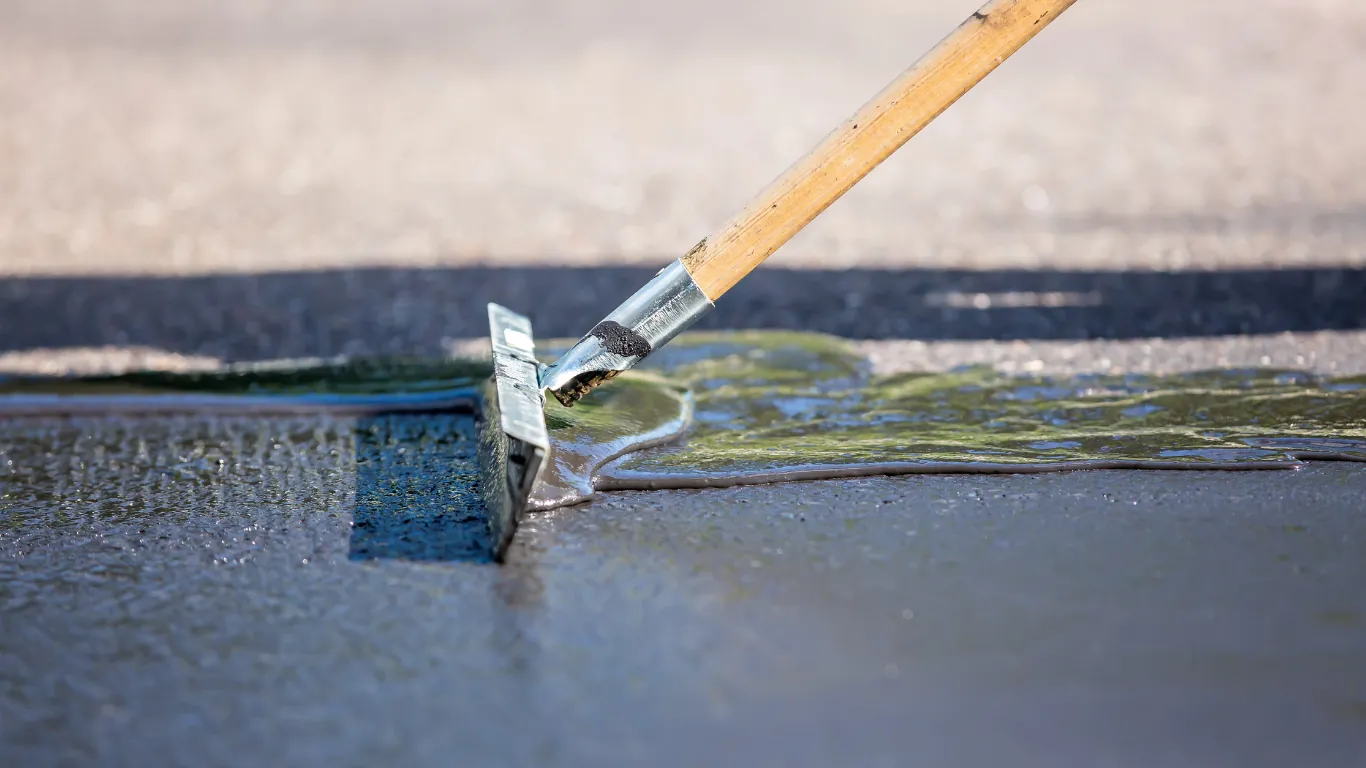
Sealcoating protects. It does not repair.
Sealcoat is a coating over sound asphalt. Its job is to block UV, water and oxidation — the three things turning your pavement grey, brittle and porous. What it cannot do is bridge a gap or replace missing material. A sealer applied over an open crack looks closed for a few weeks and then telegraphs that crack straight back through, because the crack is still moving underneath it.
Crack filling keeps water out of the base
This is the highest-return money you can spend on asphalt, and it is also close to the cheapest. A crack is a water inlet: it channels water into the base, softens the material carrying the load, then freezes, expands and levers the edges apart. One Virginia winter is enough to take a hairline to something you can put a finger in. Rule of thumb — if you can get a coin edge into it, fill it. If there is anything growing out of it, it is overdue, because roots hold it open and hold it wet.
Patching replaces material that has already failed
A pothole is not a hole in the surface, it is the surface collapsing into a failure underneath. Patching means cutting back to genuinely sound edges, checking what is under there, and rebuilding in compacted lifts. Shovelling material into the hole and rolling it flat is not a repair; it is a way of having the same conversation again next spring.
The order is fixed: fill, patch, seal, stripe
Cracks get filled and failures get patched, then the sealer goes over a closed surface, then — on a lot — the striping goes onto the fresh seal. Every other order costs money. Seal first and you seal over open cracks. Stripe first and you paint lines that the sealer then covers up. On a large commercial job that sequencing is the main thing you are hiring a contractor to get right.
When the honest answer is "none of these"
Sometimes a surface is far enough gone that a seal coat is lipstick and patching is whack-a-mole, and the right recommendation is removal and replacement. That is not a job we are trying to talk you into or out of — it is just the truth about some pavement, and you deserve to hear it before you spend money rather than after.
A quick self-check before you call
Walk the surface and look for four things: hairline surface checking across a wide area, which points at sealcoating; distinct lines you could get a coin into, which point at crack filling; soft spots, sunken areas or holes, which point at patching; and standing water that never drains, which points at a grade or base problem that none of the three will fix. Tell us which of those you are seeing and the estimate conversation starts a long way ahead.
Most surfaces need some combination of the first three, and knowing the proportions is what an estimate is for. Tell us what you are seeing and we will tell you which of these your pavement actually needs.